With the cost of everything rising, sometimes I had to make decisions between whether I buy food or buy period products. Could I stretch my pads or tampons out and use toilet paper or socks towards the end of my period?
The world’s largest body of data on menstruation.
In 2024 we surveyed 153,620 menstruators
and the results were shocking.
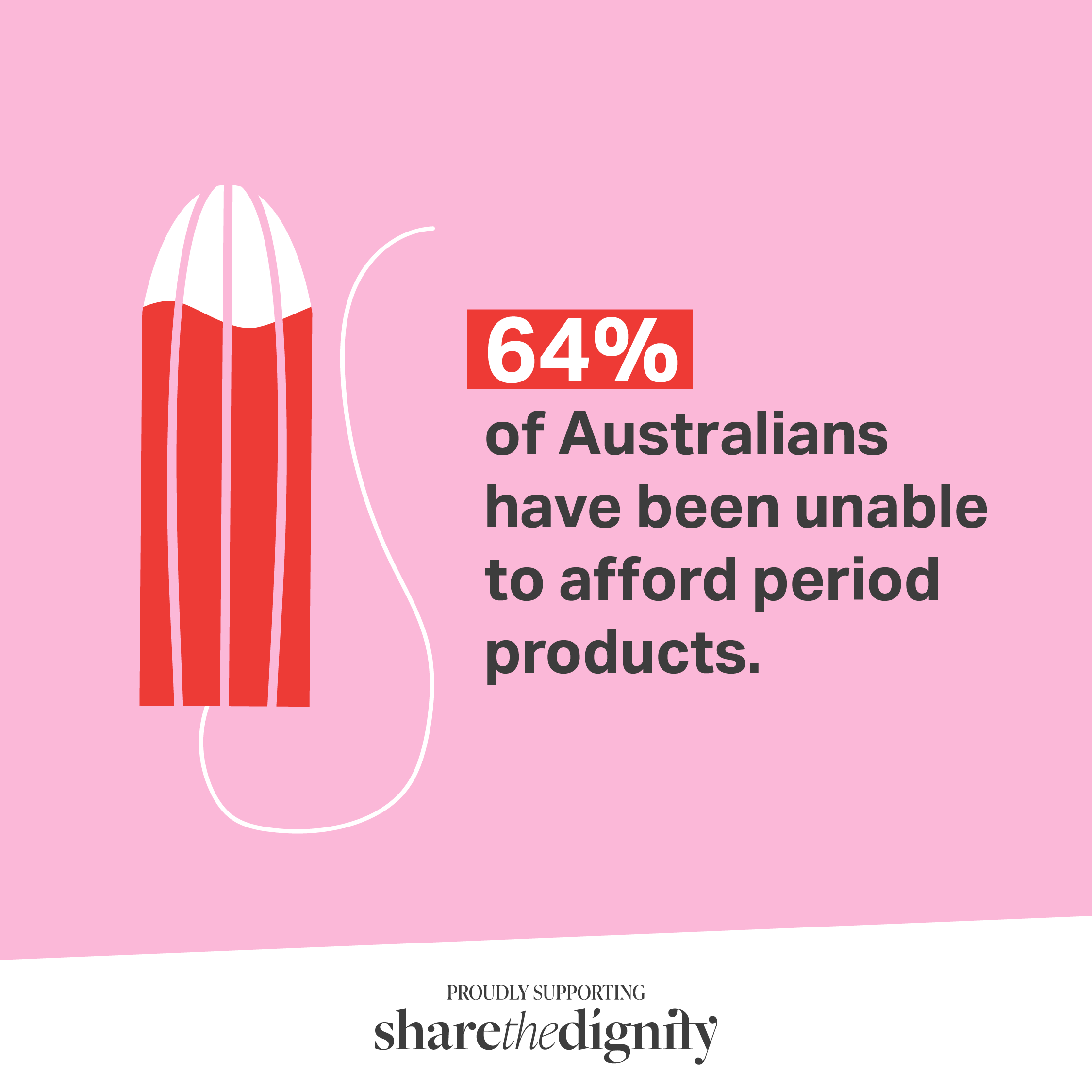
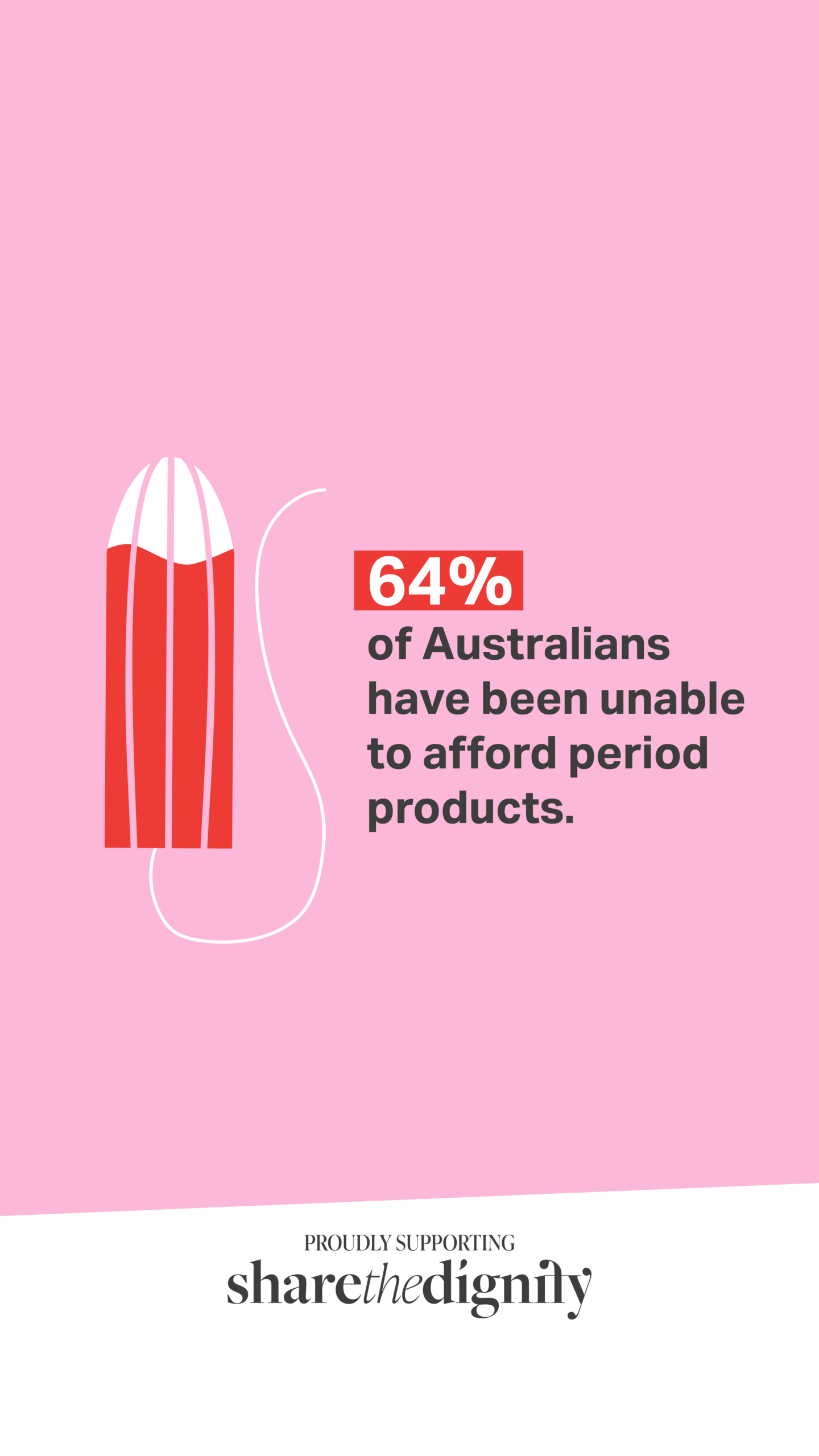
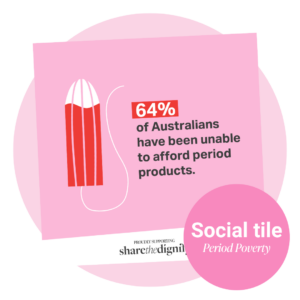
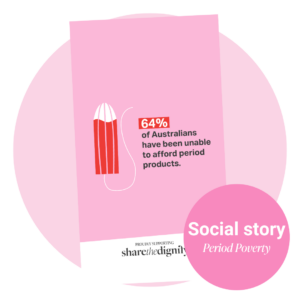
64% of menstruators have struggled
to afford period products due to cost.
Unfortunately, this number dramatically increases for certain communities.
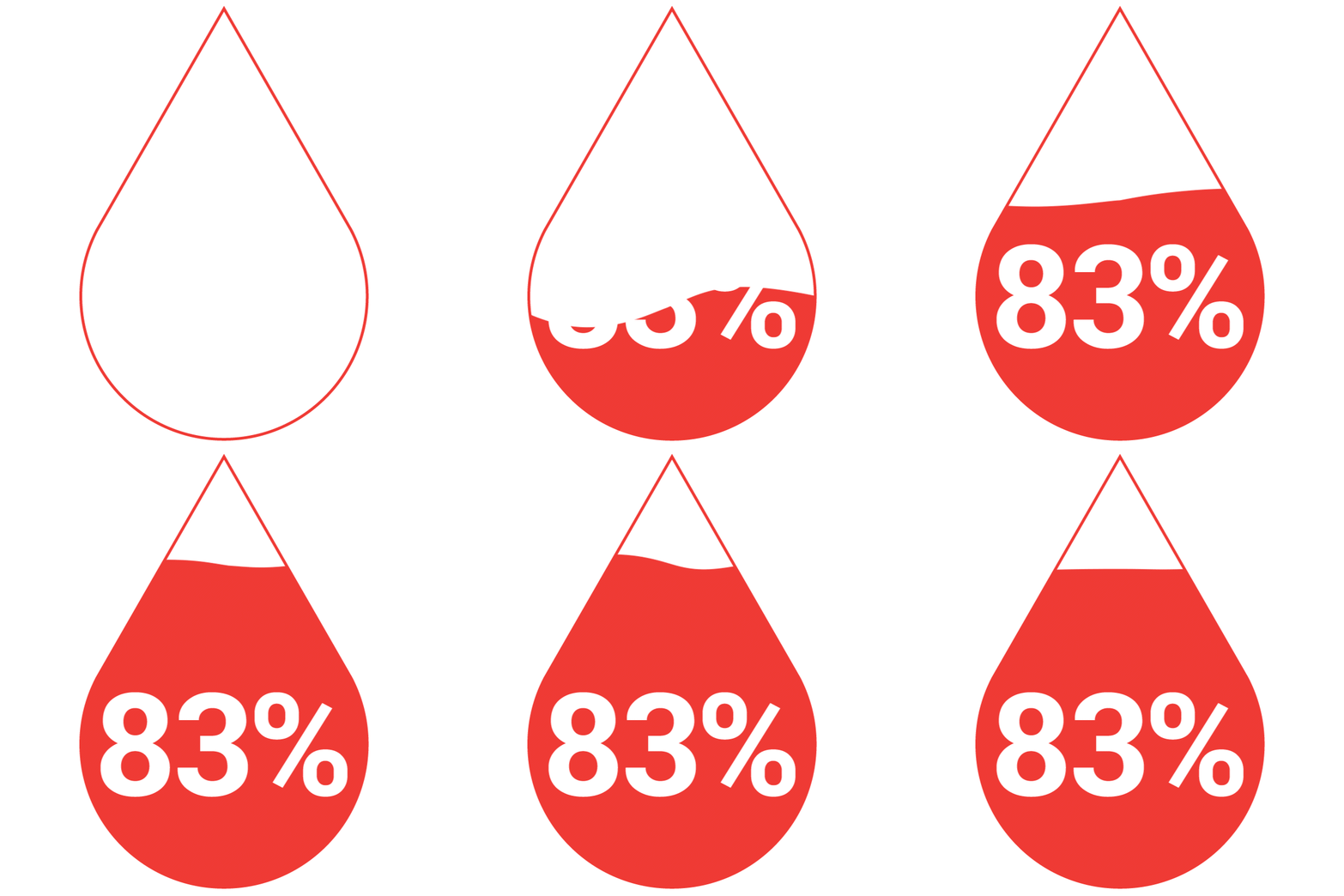
of Aboriginal/Torres Strait Islanders have struggled to afford period products due to cost.
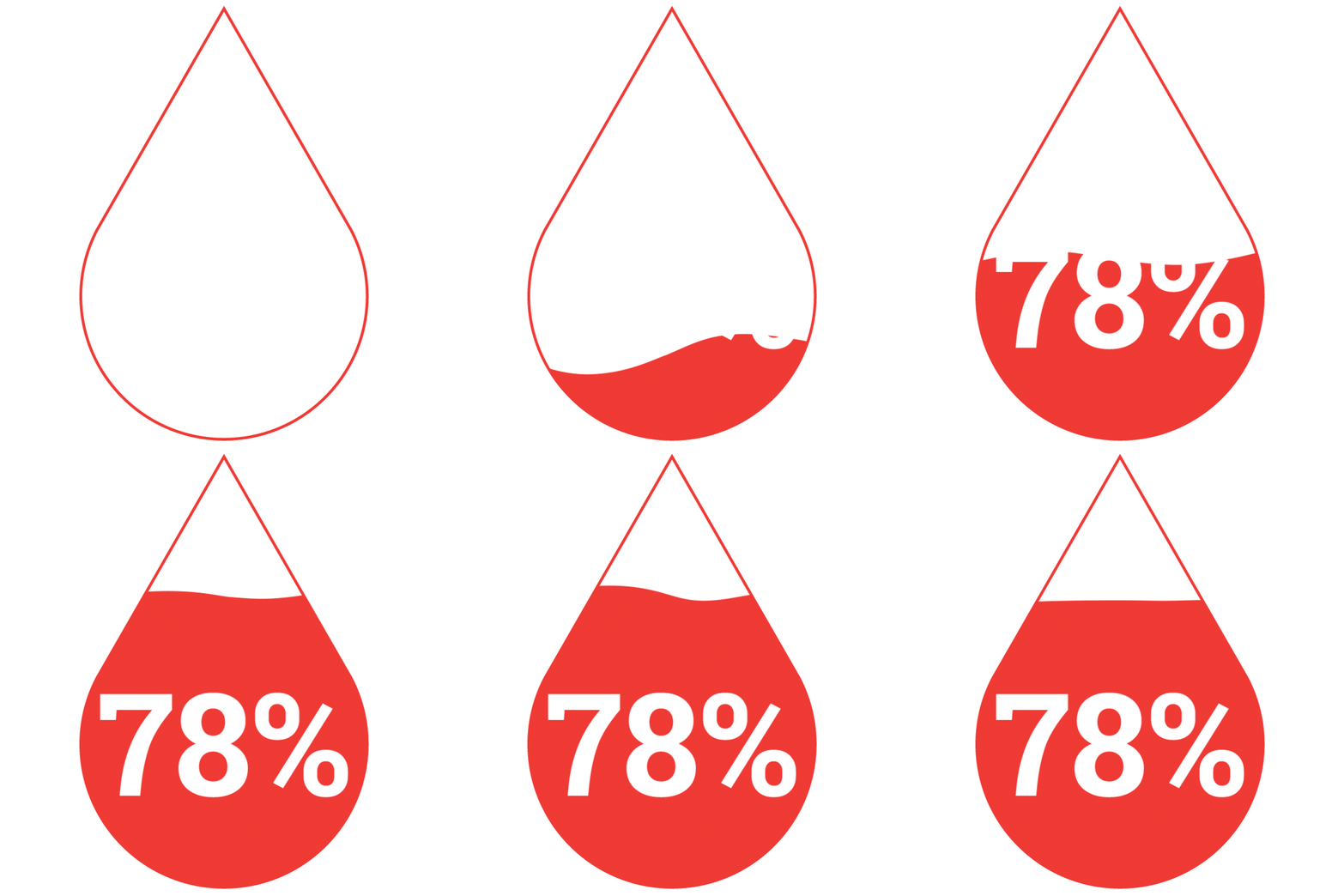
of those with a disablilty or chronic condition have struggled to afford period products due to cost.
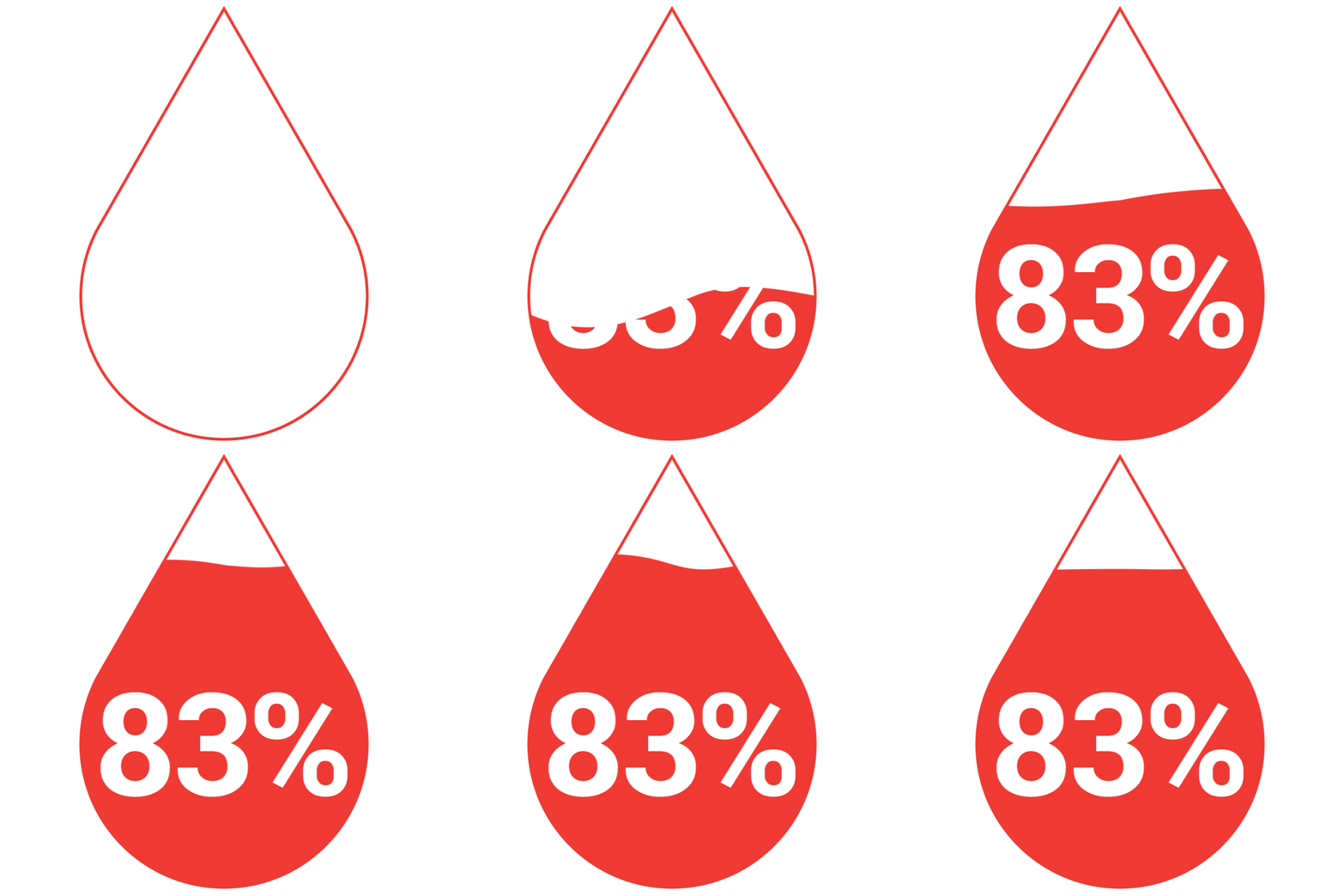
of the gender diverse community have struggled to afford period products due to cost.
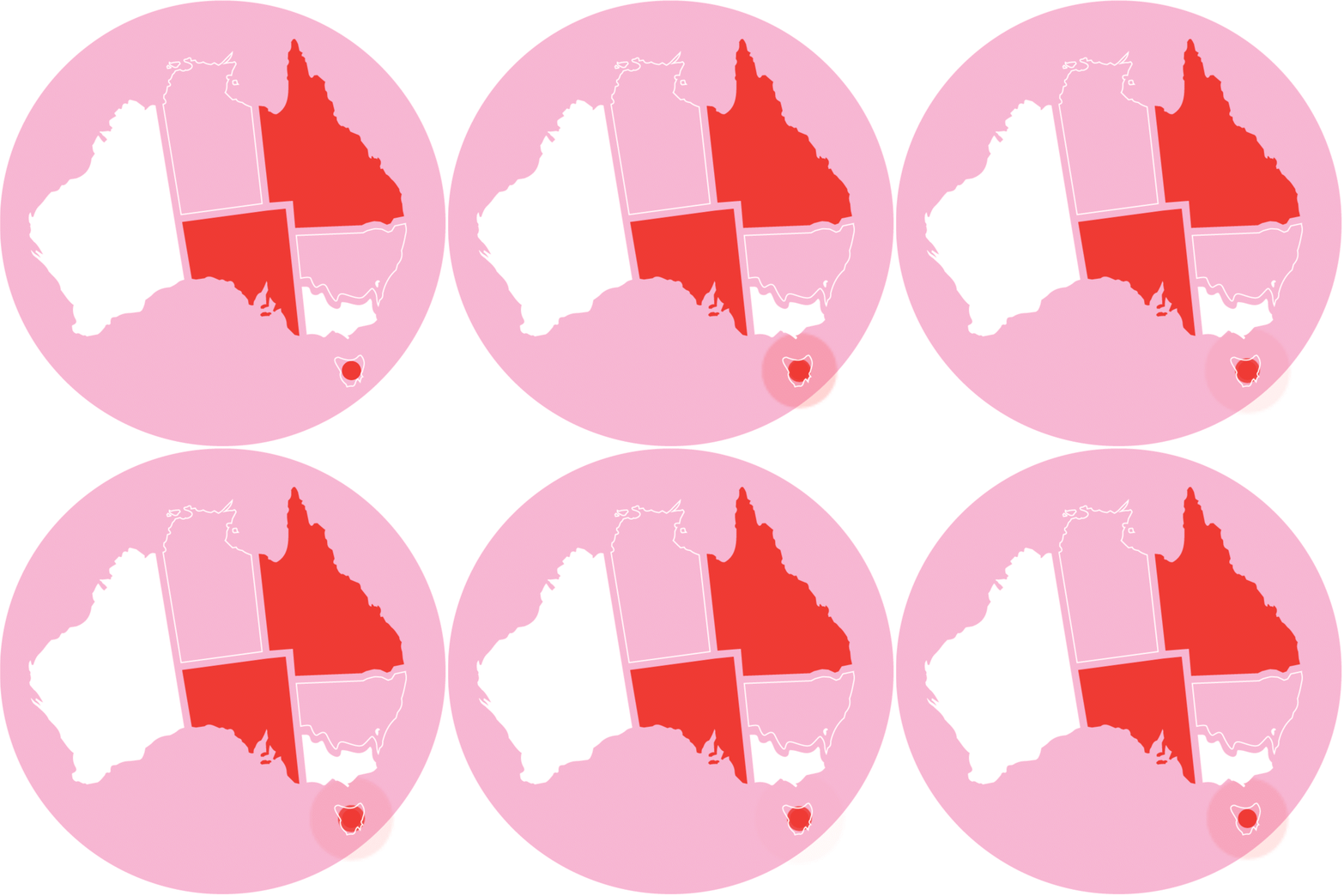
Menstrual inequity exists all across Australia but is most prevalent in Tasmania and least in the ACT.
Our interactive Dignity Map is Australia’s first and demonstrates the reality of menstrual inequalities in Australia. Check the map to view the statistics for your area.
21.75%
of Aboriginal and/or Torres Strait Islander people were unable to afford period products in the last 12 months.
This is in comparison to
6.9% of non-Indigenous people.
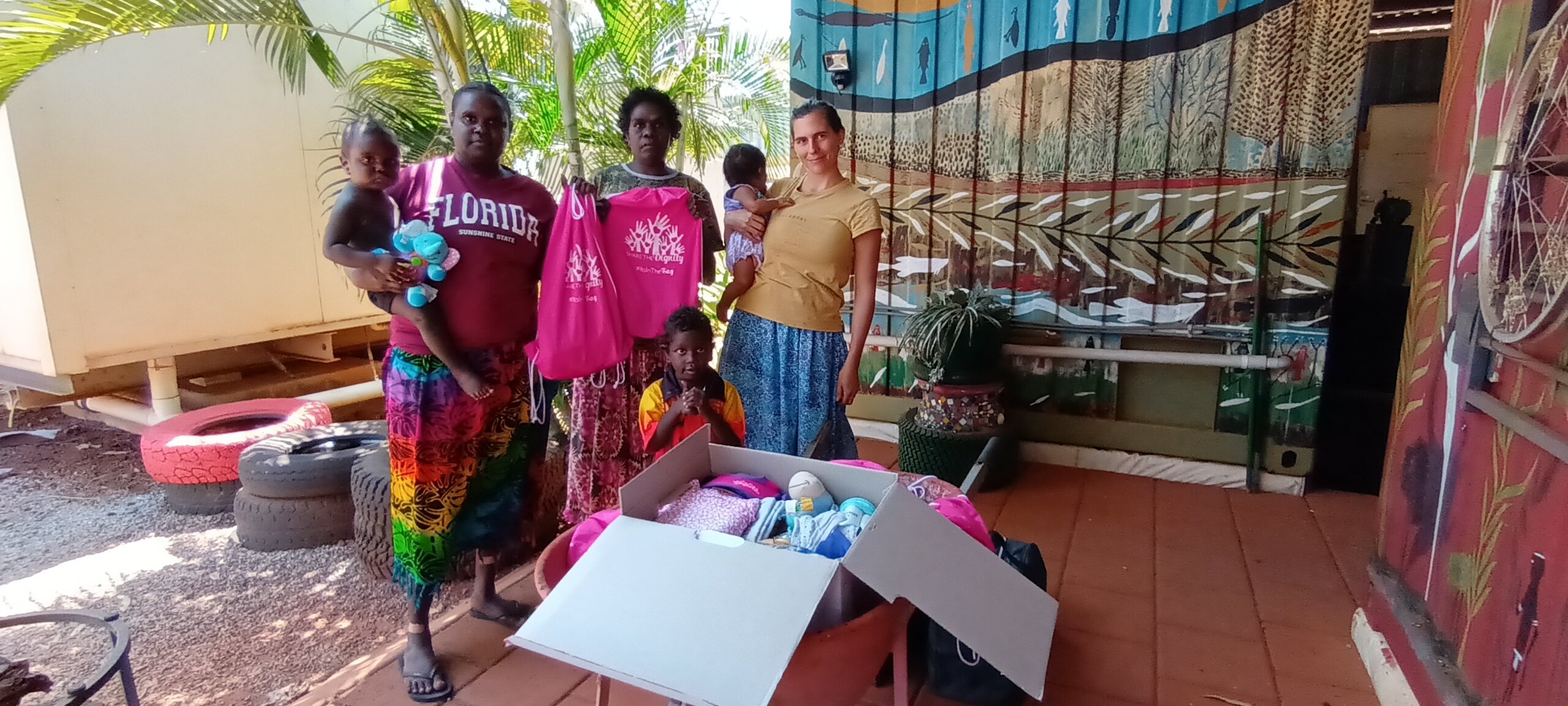
More students at TAFEs and universities are improvising on period products when compared to our 2021 survey data.
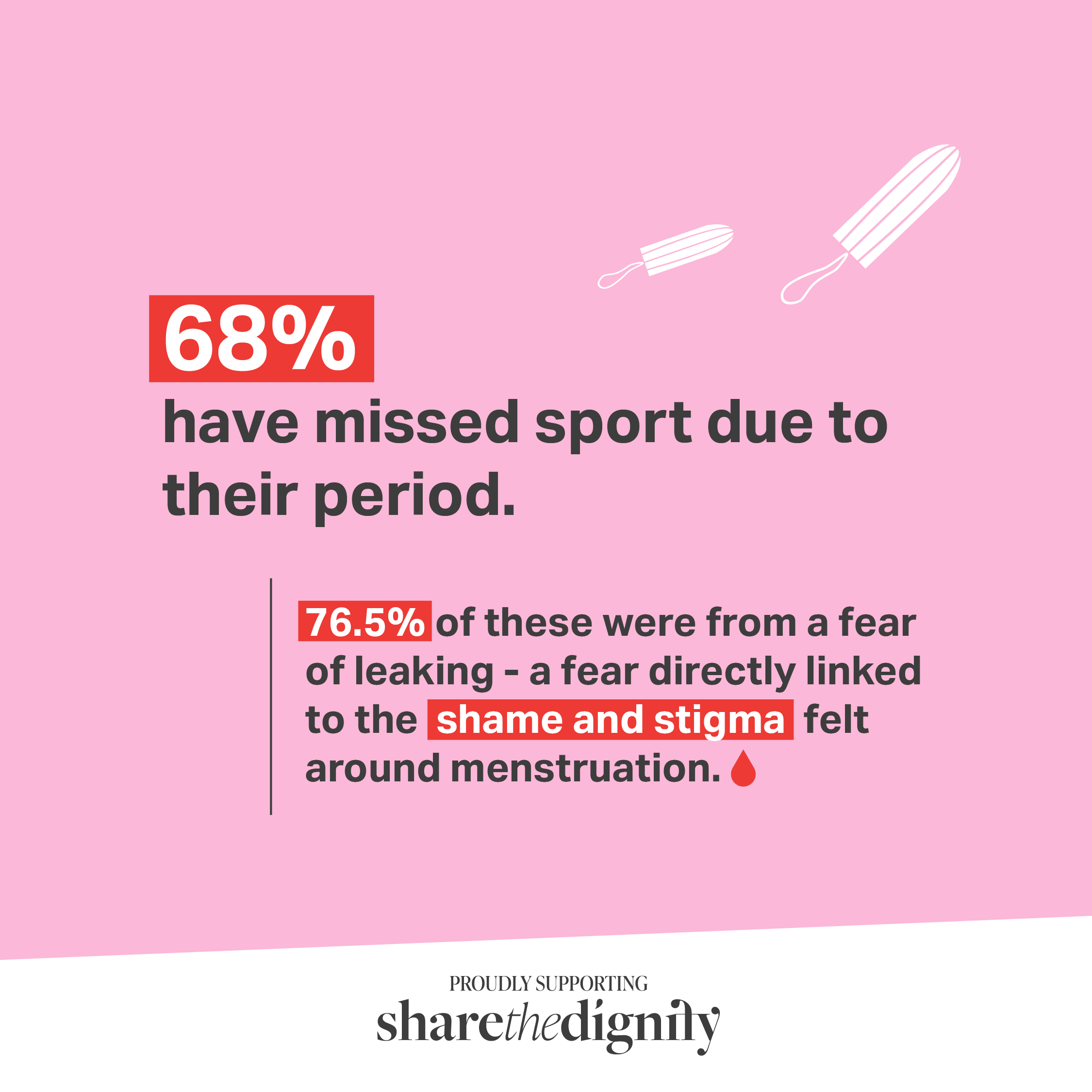
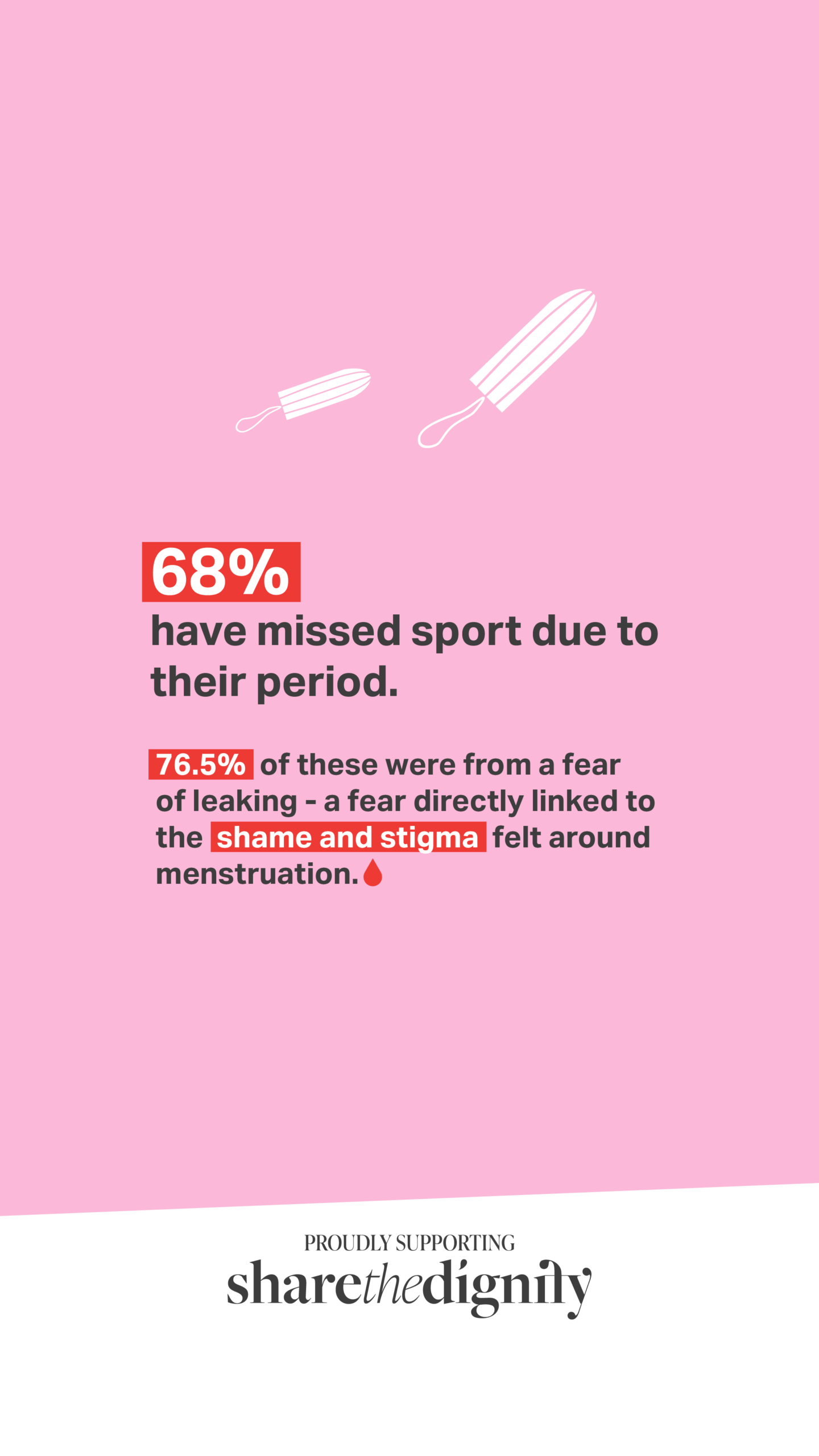
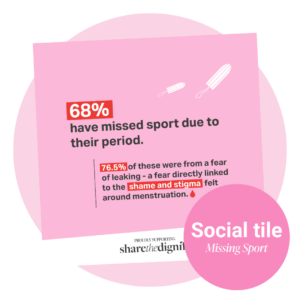
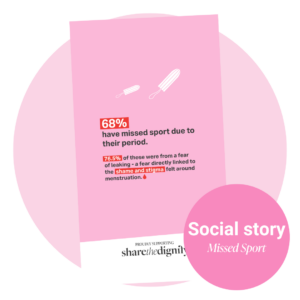
68% of respondents missed sports due to their period and for 76.5% this was due to a fear of leaking and staining their clothes.
This fear is directly linked to the shame and stigma around menstruation.

ONLY 36% of respondents felt well-educated about menstruation before their first period.
This education gap starts at school. We found respondents got their periods as young as eight years old but children might not be educated about them at school until they are at least ten.
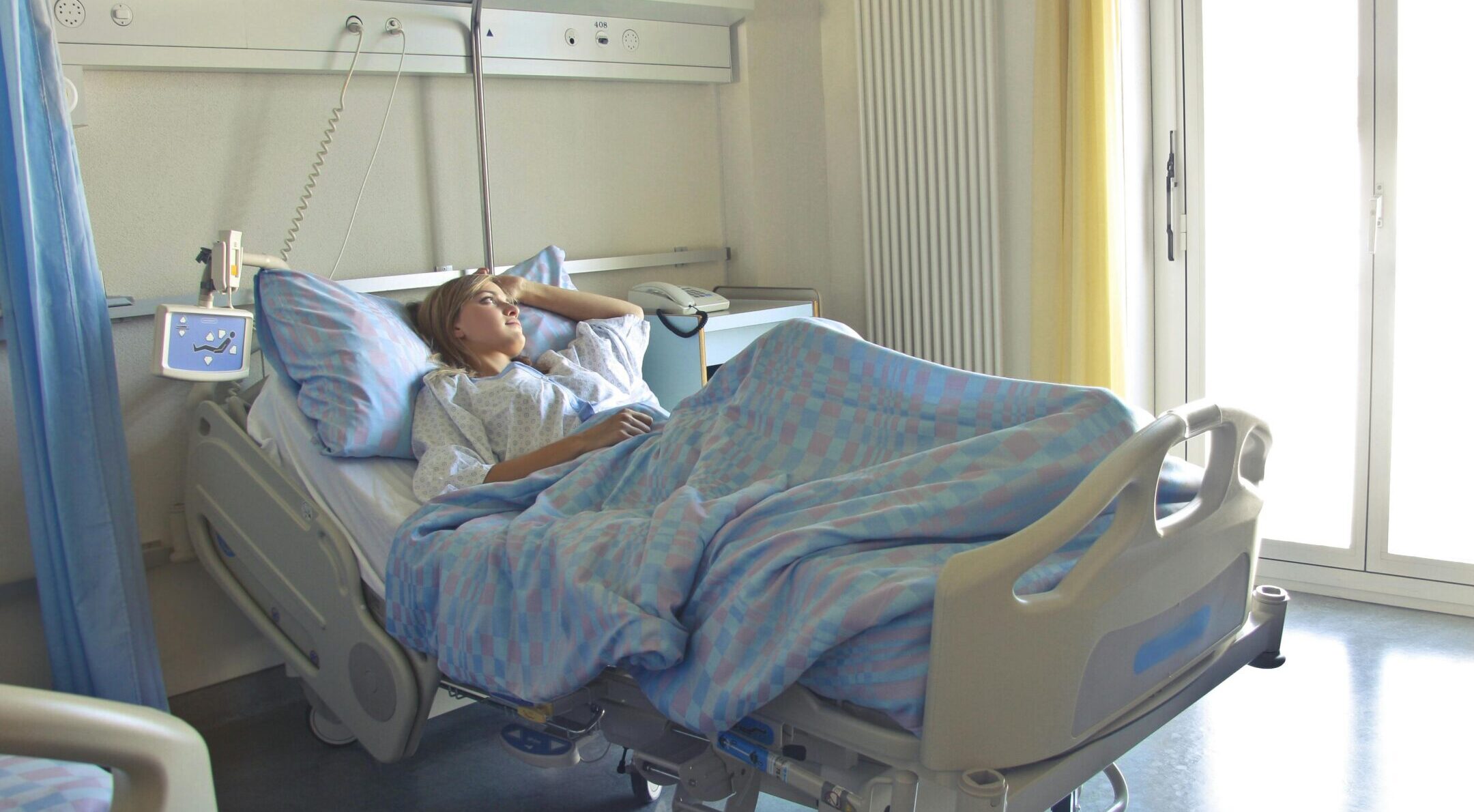
12%
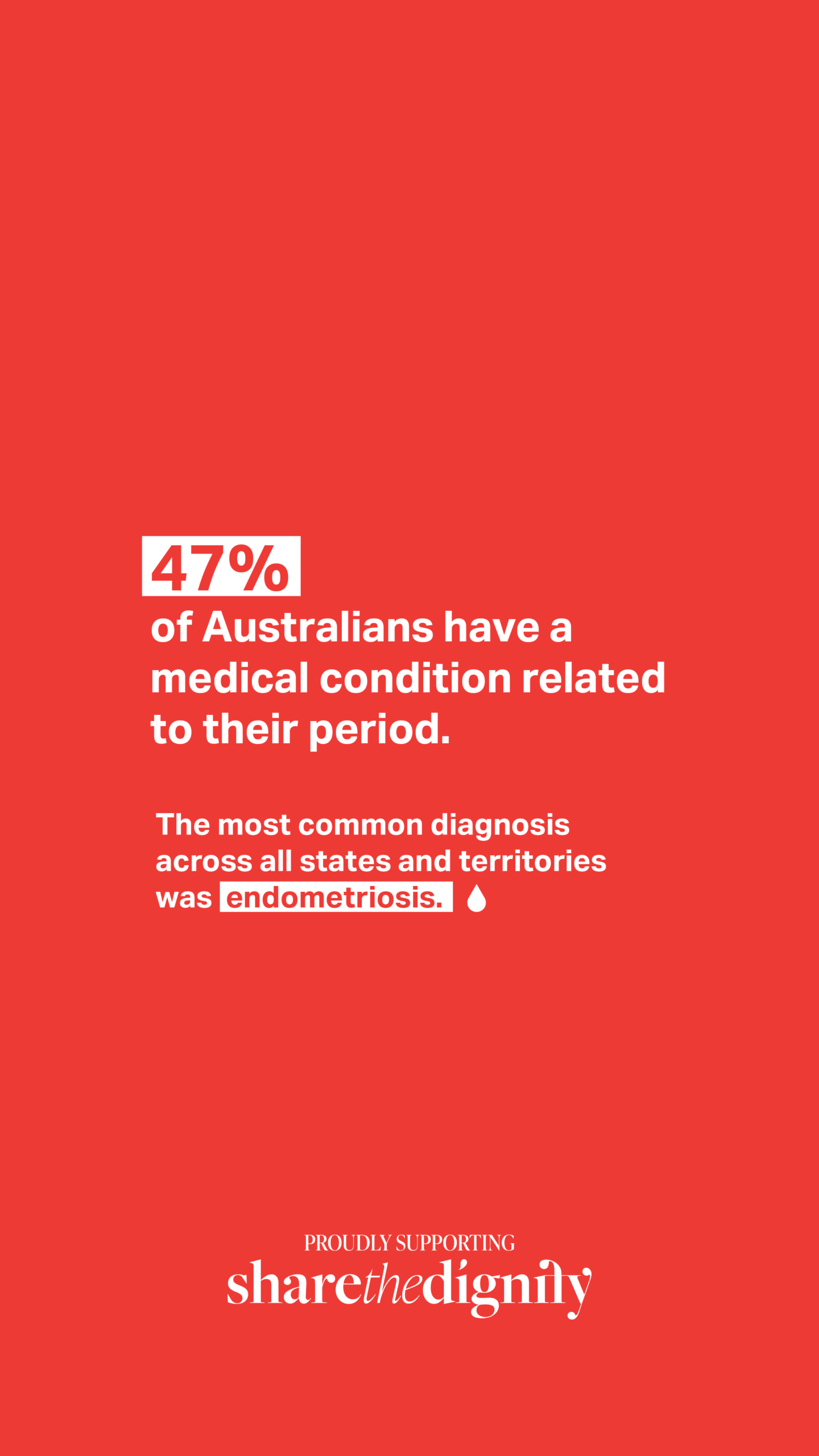
of respondents have needed period products in hospital and not received them. Not all hospitals are mandated to supply period products.
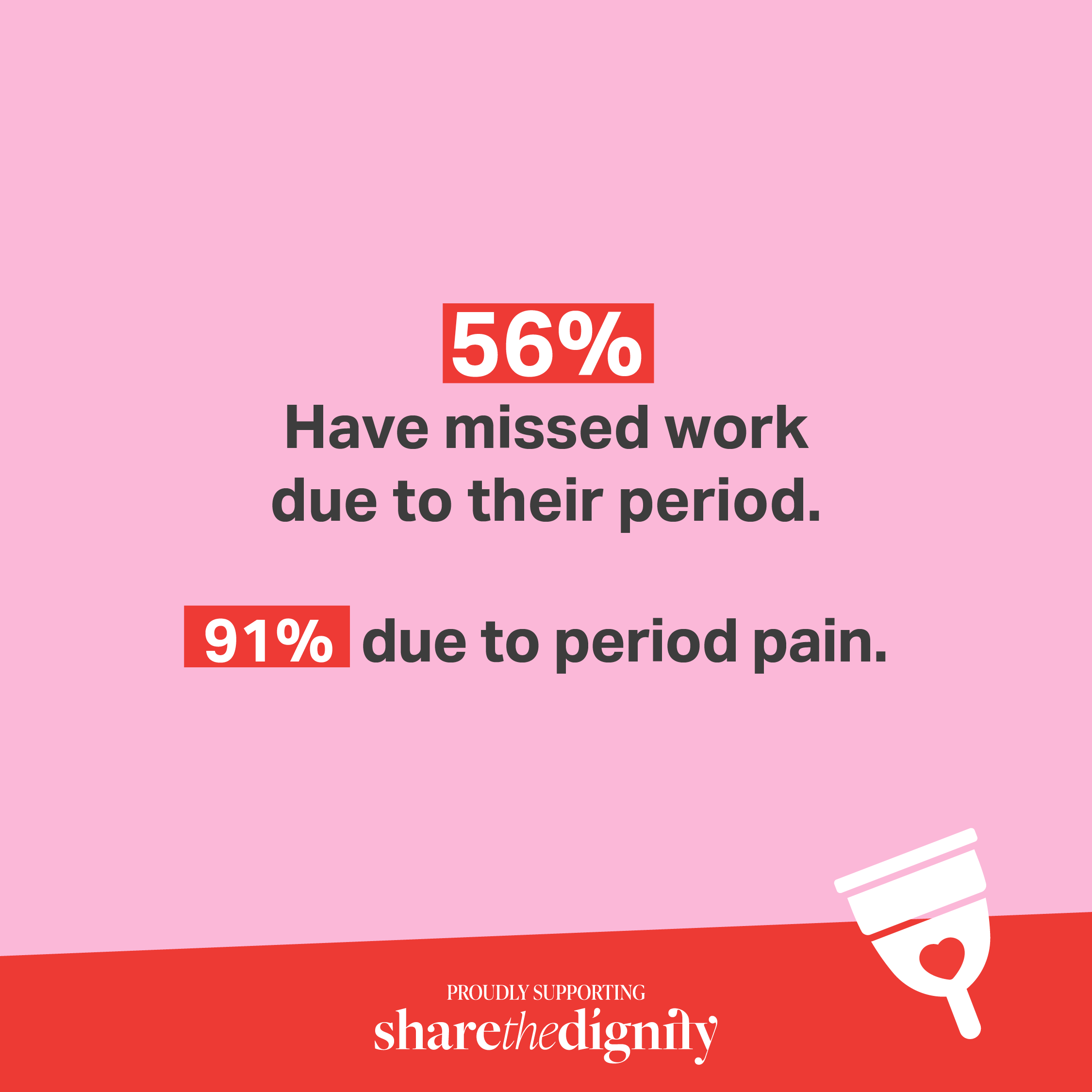
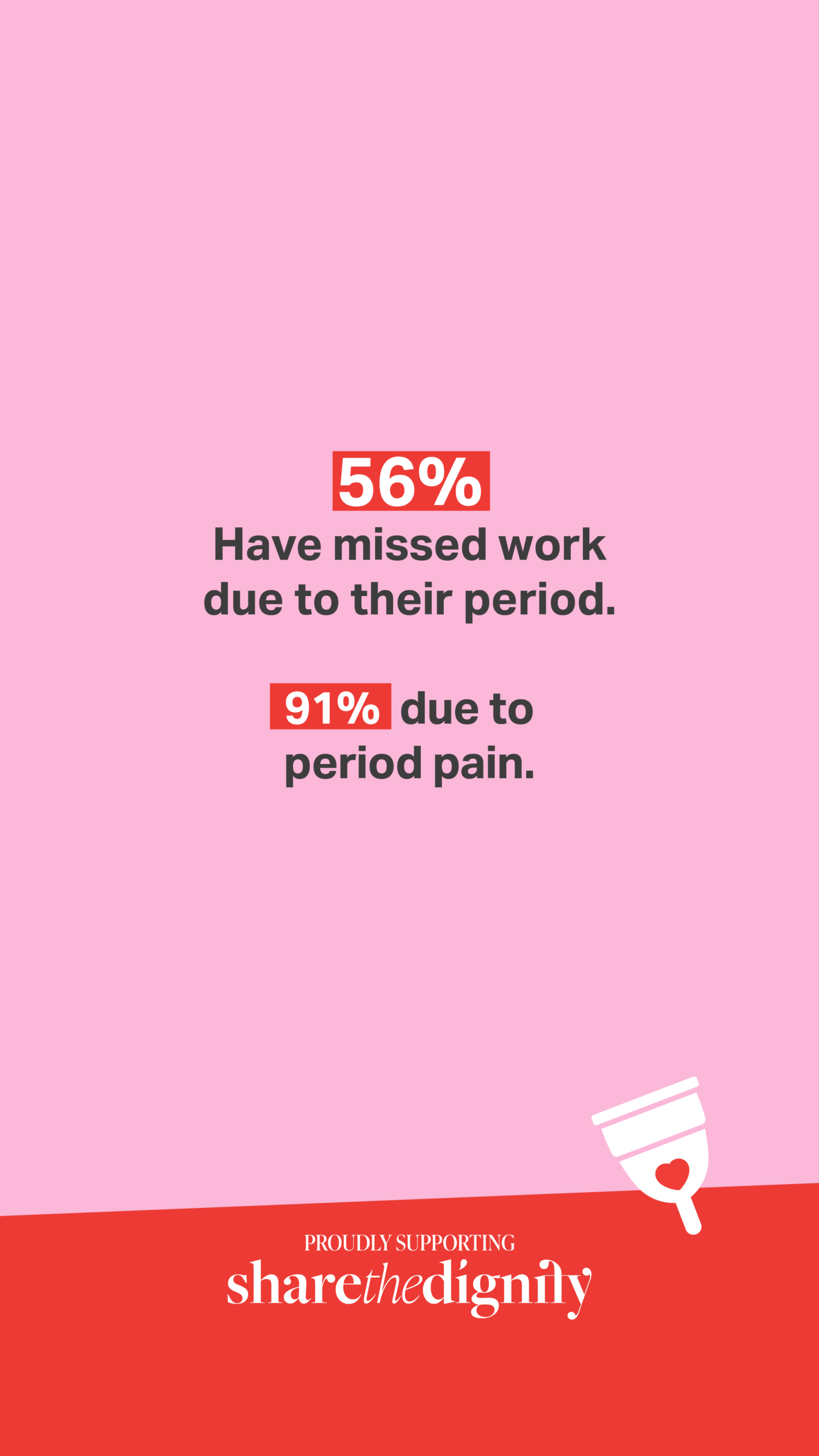
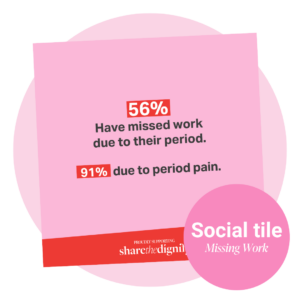
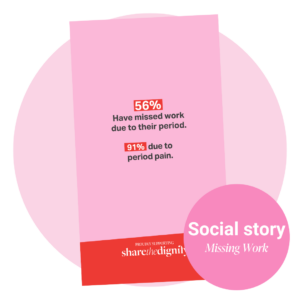
56% of respondents missed work due to their period.


is the total dollar figure that we can attribute to missed work days due to periods per year.
This shows more needs to be done to make workplaces period friendly.
So… what’s next?
We’ve outlined a few main issues that were revealed through our data and our next steps for creating lasting impact.
Removing periods as a barrier to education.
We want to ensure no person misses a day of learning due to their period. Share the Dignity has successfully advocated for period products to be provided in public high schools, but this needs to include primary schools, TAFE and University.
Advocate for period-friendly workplaces and sporting venues.
People are missing work and sport due to a fear of leaking. We see this as a fixable issue and will advocate for period products to be provided in sporting venues and workplaces.
Specific, localised impact.
We collected postcode data so we can identify areas impacted most by menstrual inequity and advocate for those councils to better support their community.
Continue to #PadUpPublicHealth.
No one should be sick and vulnerable in hospital and not be given period products if they suddenly get their period. We will continue to advocate for period products to be provided in hospital through our #PadUpPublicHealth campaign.
Support our Indigenous communities.
Aboriginal and/or Torres Strait Islander communities are disproportionately affected by menstrual inequity and we will continue working with these communities to ensure dignified access to period products.
Smash the stigma!
Shame and stigma continues to be an issue in Australia. We will continue advocating for better period education because if we can’t talk about periods, then we can’t address menstrual inequity.
Download the Bloody Big Survey
Read the full Bloody Big Survey report by inputting your details below and we will email you a copy.
Share the Results
Help us advocate for change by sharing some of the shocking statistics uncovered through our 2024 Bloody Big Survey.
Caption Suggestion
Social Post:
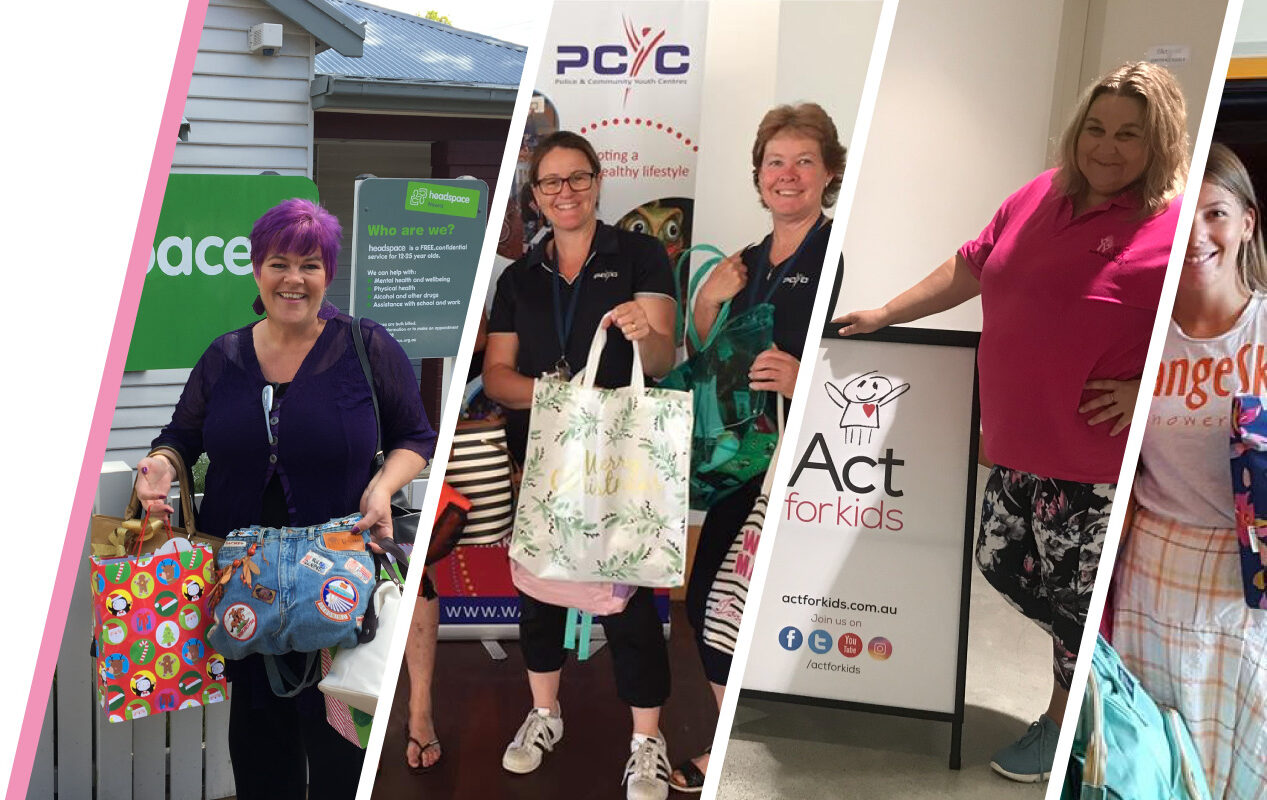
Menstruating isn’t a choice, but those experiencing menstrual inequity often have to choose between period products and other essential items just to get by. We’d rather they didn’t have to choose. That’s why we’re proud to be an official collection point for @sharethedignityaustralia’s #DignityDrive this August. Find out more about how you can get involved at www.sharethedignity.org.au/dignity-drives or via the link in our bio.
Missed the 2021 Report?
You can download it here
The 2021 Bloody Big Survey offered us a great baseline for the state of menstrual inequity in Australia.
We have committed to running the survey every 3 years to monitor changes and identify opportunities for advocacy, education or intervention.
Thank you to the following organisations for supporting the 2024 Bloody Big Survey.






About the Report
The 2024 Bloody Big Survey was run online using Typeform software and was comprised of 49 questions. It was conducted from 1 March to 31 May 2024, with a total of 153,620 responses, an increase of almost 30,000 from our first survey in 2021.
The Report was prepared by Dr Jane Connory from Swinburne University, with data analytics support from Ashish Chopra and WhyHive, for Share the Dignity for the purpose of analysing the results of their Bloody Big Survey, 2024.
The average respondent was aged between 30 and 39, identified as female, lived in New South Wales and worked full-time.